
Replika’s founder built the AI assistant she pitched at Disrupt 12 years ago
Twelve years ago today, Eugenia Kuyda stood up on stage at TechCrunch Disrupt and presented a conversational chatbot called IO that acted as a lifestyle concierge to help people book restaurants and vacations along with other tasks.
IO, the first product from her startup Luka, came before the deep learning breakthroughs that would eventually lead to today’s large language models. “It still worked,” Kuyda told TechCrunch in an exclusive interview. “It was pretty magical…but, of course, it’s nowhere near what we have today.”
Luka ended up becoming Replika, the popular AI chatbot companion company. Last year, Kuyda left as CEO of Replika and founded Wabi. Last year, Kuyda left as CEO of Replika and founded Wabi.
The technology has finally caught up with her original vision for Luka, just in time for Wabi to take on a wave of new personal AI assistants such as Muse and Instinct, that promise to do everything from manage your inbox to find you the best flight deals.
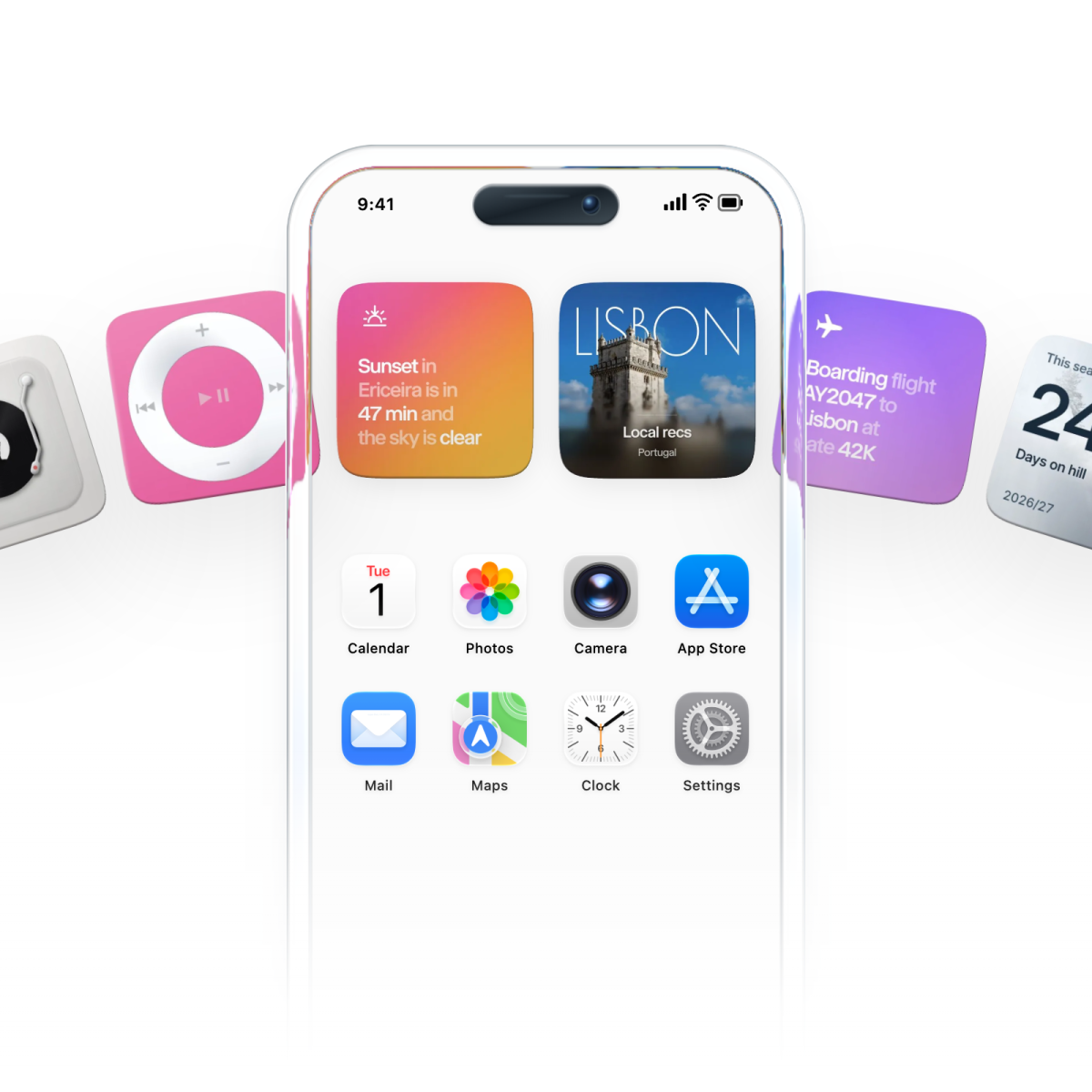
On Monday, Kuyda officially launched Wabi for all users, a multiplayer personal AI assistant that functions as a messenger app, allowing users to maintain multiple agentic threads dedicated to different tasks and long-term goals. Within each thread, users can build and use custom apps, like a weight-loss tracker inside a health thread or an app showing nearby children’s events inside a family thread.
The launch is something of a pivot for Wabi, though Kuyda describes it as more of an evolution. When TechCrunch covered Wabi’s initial launch last year, along with its $20 million pre-seed round, it was described as more of a social platform where you could create mini apps with prompts that you could share with friends or across the app.
Over the past year, Kuyda said the team realized that while people love personal software rather than “one size fits all solutions in the App Store,” they “maybe don’t want to spend a lot of time, or any time, building it.”
With Wabi 2.0, the agent decides what apps to build. The moment you connect it to your email, it automatically spins up a number of threads and apps to start with, and users can add to that by requesting custom apps or starting new threads.
“It’s doing what Instinct and Muse do, but it also has all these apps, which helps users do more stuff,” Kuyda said.
App-building isn’t Wabi’s only differentiator. Kuyda is also betting on its multi-threaded, multiplayer design.
“It’s not just everything in one single thread like with Instinct and Muse, where you get buried in the information that it sends you everyday,” Kuyda said. “Single thread experiences, if you think about it, get worse over time because it’s just so much context in one endless conversation.”
The longer an AI chatbot conversation goes on, the more likely it is to hallucinate, lose track of context, or respond in ways that would otherwise be blocked by safety guardrails, according to interviews with AI researchers.

Threads can also be shared, functioning as group chats.
“Today, all the agentic apps are just [conversations] between you and the agent, and I feel like it should be a lot more about bringing people together in a group chat together,” Kuyda said. “Not you doing it separately with your AI, and I’m doing it separately with my AI…I don’t think anyone has yet cracked multi-player.”
Kuyda walked TechCrunch through some of her own shared threads. In one with her boyfriend, a row of apps along the top helps the two of them connect and find things to do together, including a live music tracker, an app that asks a question every day about their relationship, a running list of restaurant suggestions, important events from their shared calendar, and a list of books they’re reading together with suggestions for what to read next.
In her more family-focused thread, there is an app tracking her daughter’s schedule, another for finding kid-friendly events nearby, and another that quizzes her daughter on Japanese.
Within any shared chat, users can share as much or as little as they want, from email and calendar information to bank account details.
“So my partner can ask Wabi in the chat, ‘Is Eugenia free next Thursday?’ or ‘Did she buy those tickets?’” Kuyda said. She noted that access is scoped to individual chats, and everyone in a chat can see when someone’s personal information is requested.
On privacy more broadly, Wabi is SOC 2 compliant, meaning its data security controls have been independently audited. Wabi runs entirely in the cloud, and most user data is stored in the U.S., Kuyda said.
“My previous company Replika worked on AI that will make people feel…less lonely,” Kuyda said. “To a degree, that is [in Wabi] as well. AI can bring people together, even when it comes to just helping you spend time better together in real life, whether it’s going out and seeing a concert together or finding the next book that you will read together.”
Wabi is free for now, and the company hasn’t settled on a business model yet. Kuyda said Wabi is in talks to raise more funds.
When you purchase through links in our articles, we may earn a small commission. This doesn’t affect our editorial independence.
Source link
